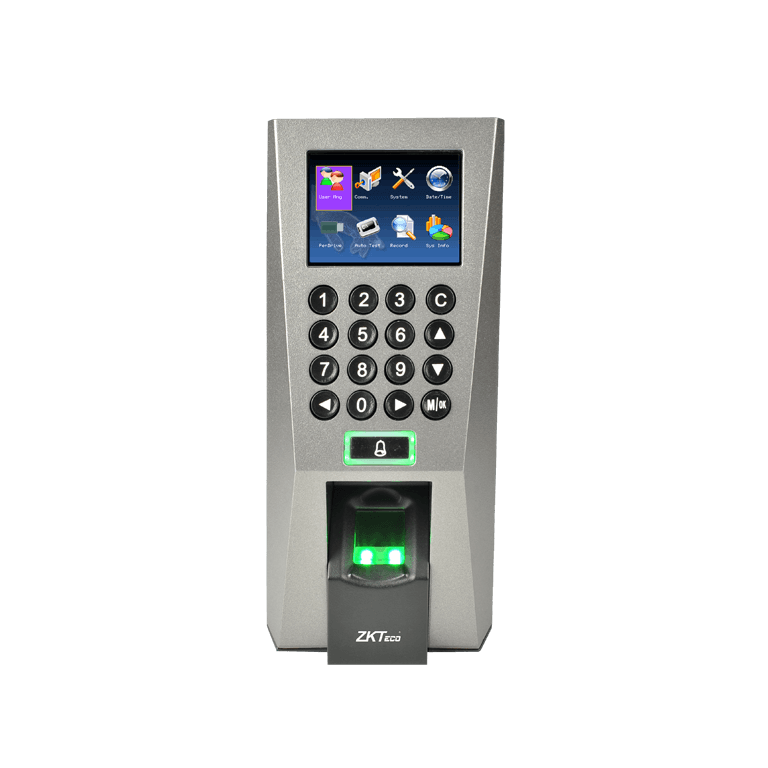
Security has become a top priority for everyone in today’s environment of rapid change, including corporations, governments, and individuals. The ways in which we ensure security have changed significantly along with the ongoing breakthroughs in technology. Biometric access control systems are among the most creative and useful innovations in this field.
Utilizing distinctive biological characteristics, biometric access control systems confirm an individual’s identification and offer a very safe and effective way to manage access to different locations. Biometric access control systems use traits like fingerprints, facial features, iris patterns, and voice recognition to grant or deny access, in contrast to traditional access control systems that rely on passwords, PINs, or tangible keys.
Types of Biometric Systems
Biometric access control systems can be categorized based on the type of biological trait they utilize. Here are some of the most common types:
- Fingerprint Recognition:
- Description: This method analyzes the unique patterns of ridges and valleys on an individual’s fingertips.
- Advantages: Fingerprint recognition is highly accurate and widely used due to its simplicity and cost-effectiveness.
- Facial Recognition:
- Description: This system uses algorithms to identify and verify individuals based on the unique features of their face, including the distance between eyes, nose, and mouth.
- Advantages: Facial recognition can be non-intrusive and can operate at a distance, making it suitable for various applications, including surveillance.
- Iris Scanning:
- Description: Iris scanning involves capturing the intricate patterns of the iris, the colored part of the eye.
- Advantages: Iris patterns are extremely unique and stable over time, providing a high level of accuracy and security.
- Voice Recognition:
- Description: This method identifies individuals based on vocal characteristics and speech patterns.
- Advantages: Voice recognition can be used for remote authentication and is less intrusive compared to other biometric methods.
- Hand Geometry:
- Description: Hand geometry systems analyze the size and shape of an individual’s hand, including the length and width of fingers.
- Advantages: While not as unique as other biometric traits, hand geometry is simple to implement and can be effective in certain applications.
- Retina Scanning:
- Description: This method involves scanning the unique pattern of blood vessels in the retina at the back of the eye.
- Advantages: Retina scanning provides a very high level of accuracy due to the uniqueness and stability of retinal patterns.
Service gallery
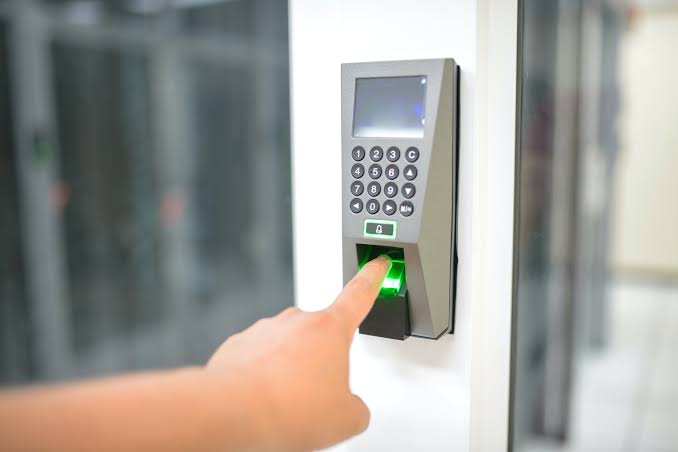
ZKTECO F18
F18 is an innovative biometric fingerprint reader for access control applications. With high-performance firmware and a compact design, it has become one of ZKTeco's most popular devices. It is equipped with ZKTeco's latest firmware, with a user-friendly UI and flexible user privilege settings for multi-level management. The new hardware platform uses a ZMM210 core board with a 1.2 GHz CPU. With optimization of both the hardware platform and firmware, the new F18 can verify fingerprints with even higher efficiency. The device offers the flexibility of both standalone installation and installation with any third-party access control panels that support the standard Wiegand signal. TCP/IP is also available, which enables F18 to be applied in different networks.